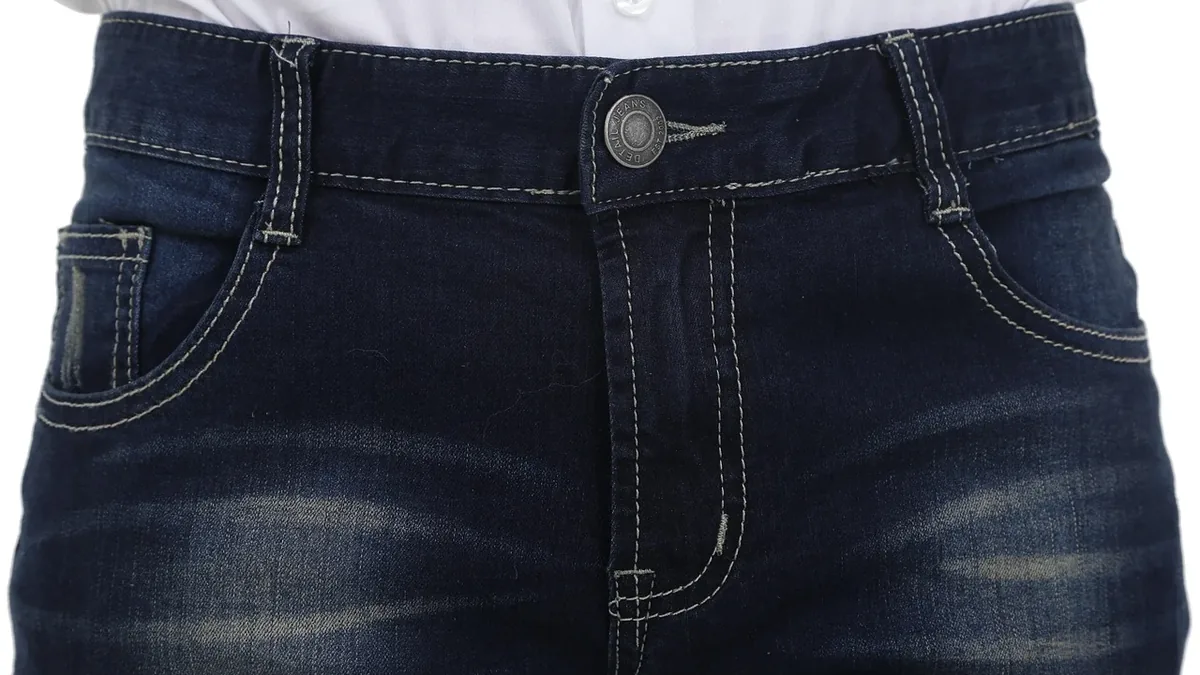
Belt Loops
| Occasion | Belt Loops |
|---|---|
| Garment | Trousers, pants, jeans, shorts |
| Heat | All climates |
| Original use | To support a belt for securing trousers |
| Typical number | 5 to 7 |
| Typical placement | At the waistband |
| Material | Same as garment fabric |
| Construction | Fabric folded and stitched into a loop |
| Width | Accommodates standard belt widths (approx. 1.25 to 1.5 inches) |
Origin and history
Belt loops are a functional component of trousers, jeans, and other waistband garments. Their origin is tied to the transition from suspenders to belts as the primary method of holding up trousers in Western menswear. This shift began in earnest during the late 19th century, as military uniforms and workwear increasingly adopted belt-based support. The first documented patents for trousers featuring integrated belt loops appear in the early 20th century, with designs solidifying in the 1920s. Their adoption paralleled the rise of casual dress and the popularity of jeans, which standardized the five-loop configuration. The innovation replaced older methods like button-on braces or tunnel loops, providing a more secure and adjustable anchor for a leather belt.
What it is for
Belt loops serve the primary mechanical function of securing a belt in a consistent horizontal position around the waistband. This prevents the belt from sliding up or down, which would compromise its ability to keep the garment properly fitted. By holding the belt in place, the loops distribute tension evenly around the waist, reducing strain on any single point of the garment's fabric. They also allow for minor adjustments in fit throughout the day as the wearer moves or sits. Additionally, belt loops provide a structured, finished appearance to the top of trousers, contributing to a tailored look. In some work or utility garments, extra-heavy-duty loops are designed to carry tools or equipment, though this is a secondary adaptation of the core design.
What to wear to Belt Loops
The term "Belt Loops" does not refer to a social occasion, but to the garment feature itself. Therefore, one does not "wear" something to belt loops. Instead, the appropriate attire is determined by the garment that possesses the belt loops. For trousers with belt loops, a belt of compatible width and style is the intended accompanying item. The belt should be chosen based on the formality of the garment, ranging from a thin leather dress belt for suit trousers to a wide canvas or leather belt for jeans. The choice of upper garment is independent, though it is typically expected that a shirt or top will be worn tucked in if a belt is visibly in use. Footwear should correspond to the overall style of the trouser and belt combination, completing a coherent outfit.
Overview
Belt loops are fabric strips, typically made from the same material as the garment, sewn at regular intervals onto the waistband. The standard number for dress trousers and jeans is five loops: one centered at the back, two at the side seams, and two spaced evenly between the side and front. The construction involves multiple rows of stitching for durability, often with bar-tacking at the top and bottom to reinforce these high-stress points. They are a near-universal feature on modern trousers for men and are common on women's trousers, though women's fashion also frequently employs alternative waistband finishes. The presence of belt loops fundamentally dictates the method of securing the garment and influences its overall aesthetic and functional category.
What to know
The quality of belt loop construction is a reliable indicator of a garment's overall manufacturing quality. Poorly attached loops with loose stitching or weak bar-tacks will often fail before the garment itself wears out. Belt loop placement is not arbitrary; proper spacing ensures the belt lies flat without buckling and provides even support. Some formal wear, like tuxedo trousers, traditionally forgoes belt loops in favor of side adjusters or suspender buttons, considering a visible belt to be informal. In denim, the rear belt loop often aligns with the center back seam, and its reinforcement is critical due to the stress from sitting and moving. When altering trousers, a tailor must carefully remove and reattach belt loops to maintain alignment and function, which adds to the complexity and cost of waist adjustments.
Common questions
A frequent question is whether one must wear a belt if the trousers have belt loops. While not strictly mandatory, an empty loop can appear unfinished, and the waistband may gape without the tension a belt provides. People often ask how to fix a torn or detached belt loop; this usually requires re-stitching with a heavy-duty thread and reinforcing the anchor points, preferably by a professional tailor. Another common inquiry concerns the appropriate belt width, which should match the interior width of the loop with a slight tolerance for easy sliding. Many wonder why some trousers have seven loops instead of five; this is typically for heavy-duty workwear or military uniforms to provide extra stability and weight distribution. A recurring question is about the historical alternatives, which included tie-on belts, button-on braces, and fabric ties integrated into the garment's waistband.
Pros and cons
A primary advantage of belt loops is their straightforward utility, offering a simple, adjustable method to secure trousers that is easy for the wearer to manage. They provide a clean, structured silhouette and allow for the expression of personal style through belt choice. However, a significant drawback is that poorly positioned loops can cause the belt to pinch or sit uncomfortably on the hips, especially when sitting. People often regret choosing trousers with loops if they require frequent waist size fluctuations, as the fixed loop positions limit adjustment range compared to side elastic or adjusters. The common mistake is selecting a belt too thick for the loops, causing excessive friction, wear, and difficulty in threading, which eventually damages both the belt and the garment. Furthermore, loops add bulk at the waistband, which some find uncomfortable under fitted tops or layers.
Who it suits
Belt loops best suit individuals who prefer a defined waistline and the structured look of traditional tailored or casual trousers. They are practically essential for anyone who carries items on their belt, such as tools or work equipment, requiring the secure anchor points loops provide. People with a stable waist measurement throughout the day benefit most, as belts fastened through loops offer consistent fit without the need for constant readjustment. This system suits those who appreciate accessory-based style, using the belt as a complementary fashion element. Conversely, they are less ideal for individuals who experience significant bloating or weight fluctuation, as the fixed belt hole and loop system lacks flexibility. They are also often unsuitable for high-end formal wear where a seamless waistline is desired, or for certain athletic and loungewear where elasticity and comfort are prioritized over structure.