Blazers And Sport Coats
| Country of origin | United Kingdom |
|---|---|
| First created | Early 19th century |
| Original use | Sporting and country pursuits |
| Garment type | Tailored jacket |
| Formality level | Business casual to semi-formal |
| Structure | Unstructured to lightly padded |
| Fabric weight | Lightweight to mid-weight |
| Closure | Single-breasted or double-breasted |
| Pockets | Typically patch or flap pockets |
Origin and history
The blazer originated in Britain in the early 19th century, initially as a brightly colored, often navy blue, jacket worn by rowing club members and later by schoolboys. Sport coats, known as odd jackets, evolved from the practical tweed and country suits worn for hunting and shooting in the British and Irish countryside throughout the 19th century. The critical distinction from the tailored suit jacket emerged as these garments were designed for less formal, active pursuits. By the late 19th century, the blazer had become standard for sports teams and naval officers, solidifying its separated identity from business attire. The sport coat followed a similar path, becoming acceptable as a standalone item of casual dress in the early 20th century. This historical divergence from the matched suit established the foundational principle that these jackets are worn with trousers of a differing material or color.
What it is for
Blazers and sport coats serve to provide a structured, polished layer that elevates casual or business casual attire without the formality of a full suit. They are specifically intended for occasions where a suit would be overly formal, yet denim or a standalone shirt would be insufficient. Common settings include casual office environments, weekend social events, dinners, and daytime weddings. Their function is to bridge a gap in a wardrobe, offering versatility through their ability to pair with a wide range of trousers, from chinos to dress pants. Unlike a suit jacket, they are designed as independent pieces, allowing for greater creative expression and adaptability. The choice between a blazer and a sport coat further refines the formality level, with the blazer generally being more versatile and the sport coat more casual and textured.
Blazers And Sport Coats guide
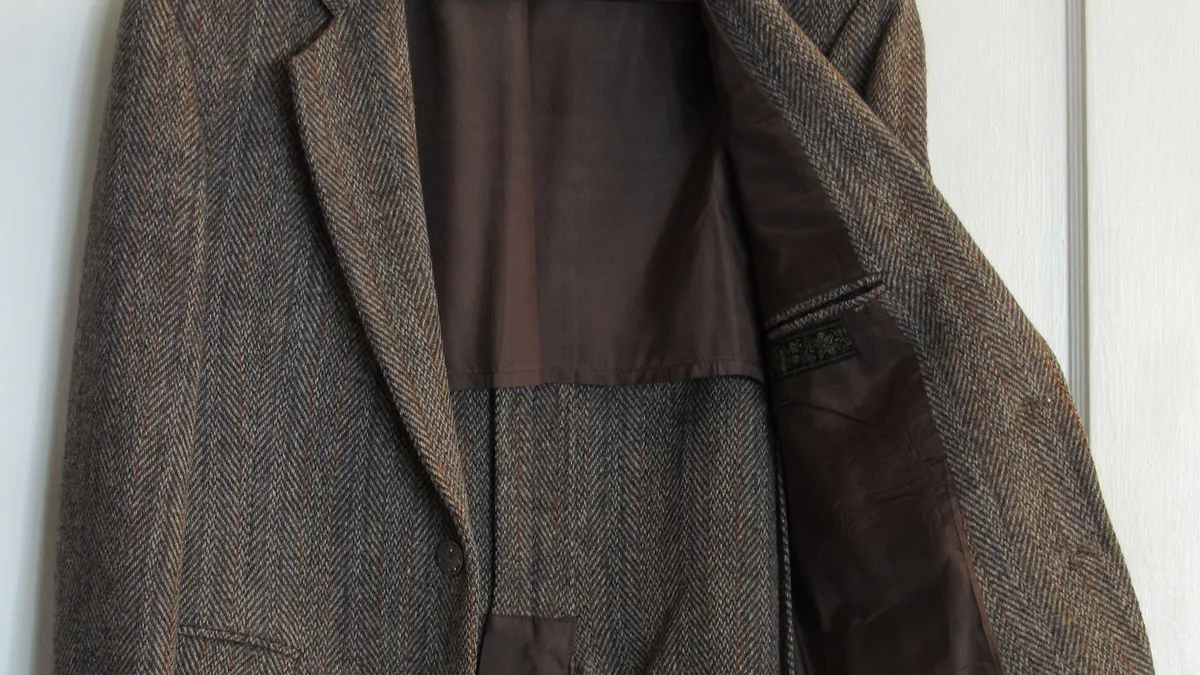
A blazer is typically a solid-color jacket, most famously in navy, with metal buttons, presenting a sharper and more uniform appearance. A sport coat is characterized by a more textured fabric, such as tweed, herringbone, or hopsack, and often features patterns like checks or windowpanes. The construction differs, with sport coats often having more relaxed shoulders and patch pockets to emphasize their casual roots, while blazers may have more structured tailoring. Fabric weight is a key guide, with lightweight wool, cotton, or linen suitable for warmer months, and heavier tweeds and flannels reserved for cooler weather. Buttons also guide identification: blazers frequently feature metallic buttons, while sport coats use horn, leather, or fabric-covered buttons. The guiding principle is that a blazer pairs with more trouser types, while a sport coat demands more careful coordination with its pattern and texture.
Overview
Blazers and sport coats are tailored jackets worn separately from matching trousers, forming the core of a smart casual wardrobe. They exist on a spectrum of formality, with the blazer being the more formal of the two and the sport coat leaning towards rustic or relaxed elegance. The range of available fabrics is vast, covering all seasons and climates, from breathable linens to insulating woolens. Fit is paramount, requiring the same attention as a suit jacket, with proper sleeve length, shoulder seam placement, and chest suppression. These garments function as foundational tools for dress codes labeled as "business casual," "cocktail attire," or "smart casual." Their enduring relevance lies in their ability to be dressed up with a tie and dress shoes or dressed down with an open-collar shirt and loafers.
What to know
Know that fabric weight and composition are the primary determinants of suitability for heat and occasion; a heavy tweed sport coat is inappropriate for a summer garden party. The fit across the shoulders is the most critical aspect, as it cannot be easily altered, and a poor fit here will compromise the entire silhouette. Buttons should generally be left undone when standing, a rule that applies more strictly than with suit jackets due to their casual nature. The formality hierarchy is generally solid navy blazer, then other solid blazers, then patterned sport coats, with texture adding further casualness. Understand that "orphaned" suit jackets should not be worn as sport coats, as their construction, finish, and pattern are designed for a specific pair of trousers. Finally, know that investment in quality construction (e.g., canvas interlining, functional buttonholes) yields a garment that will last decades and drape better.
Common questions
A common question is whether a blazer or sport coat can be worn with jeans, and the answer is yes, particularly with a darker wash jean and a casual blazer or textured sport coat. People often ask about the necessity of metal buttons on a blazer, which is a traditional hallmark but not an absolute requirement in contemporary styling. Many inquire about the appropriate trouser pairings, with the guideline being that blazers pair with almost any non-jean trouser, while sport coats require trousers that do not clash in pattern or formality. A frequent question concerns seasonality, with linen, cotton, and lightweight wool recommended for summer, and tweed, flannel, and shetland wool for winter. Individuals often ask if a pocket square is required, and it is considered an optional accessory that adds a point of interest but is not mandatory. Finally, people question the difference between a sport coat and a blazer, which hinges on the former's textured/patterned fabric and the latter's solid, often more formal, presentation.
Pros and cons
A significant pro is unparalleled versatility, allowing a single jacket to create dozens of distinct outfits suitable for a wide range of semi-formal occasions. The investment in a quality piece can be more cost-effective than multiple suits, as it multiplies the use of existing trousers. A major con is the potential for a poor fit, which is more noticeable than with a suit because the eye is not drawn to a matching ensemble, highlighting fit flaws. Many people regret choosing a jacket in an overly trendy color or extreme pattern, which quickly dates the garment and severely limits its pairing options. The common mistake is wearing a jacket that is too formal or too casual for the specific event, creating a dissonant appearance, such as a textured tweed at a business-casual office. Furthermore, cheaper, fused constructions can develop unsightly bubbling on the lapels over time and with cleaning, a flaw not present in higher-quality canvassed jackets.
Who it suits
This style suits individuals who require a professional yet not overly formal appearance in their work or social life, such as those in creative industries, academia, or business casual offices. It suits men who value wardrobe efficiency and wish to maximize combinations from a minimal number of core items. Those living in climates with distinct seasons benefit greatly, as they can own seasonal jackets appropriate for the heat or cold. It is less suited to environments with strict formal dress codes requiring daily suits or, conversely, entirely casual settings where any jacket would be out of place. Men with a propensity for classic, enduring style over fast fashion will find the most value, as these garments are designed for longevity. Finally, it suits anyone seeking to cultivate a polished personal aesthetic without the perceived stiffness of a full suit.