Fit
| Country of origin | United Kingdom |
|---|---|
| First created | Mid-19th century |
| Original use | Formal daytime events |
| Garment type | Three-piece suit |
| Fabric weight | Medium to heavy |
| Occasion formality | Formal |
Origin and history
The concept of "fit" in menswear originates from the tailoring traditions of Western Europe, particularly England and Italy, which were formalized in the 19th century. During this period, the rise of bespoke tailoring for the aristocracy and burgeoning middle class established fit as the primary measure of a garment's quality and the wearer's stature. The Savile Row tradition in London, emerging in the early 1800s, codified precise measurements and structured silhouettes for formal wear. Concurrently, Italian tailoring, especially from regions like Naples, developed a softer, more draped approach to fit that emphasized comfort and natural movement. The industrial revolution and the advent of ready-to-wear clothing in the early 20th century made standardized sizing necessary, shifting the challenge of fit from the tailor's workshop to the individual consumer. The late 20th and early 21st centuries saw a renewed focus on fit as a key component of personal style, moving beyond mere size to encompass proportion, silhouette, and intended aesthetic.
What it is for
Fit serves the fundamental purpose of ensuring a garment performs its intended functions, which range from physical comfort to social signaling. Proper fit allows for the intended range of motion, whether for the dynamic movement required in sportswear or the restrained posture expected in formal tailoring. It directly impacts the longevity of clothing, as poorly fitting garments experience undue stress on seams and fabric. A correct fit is also essential for achieving the designed silhouette, ensuring that the lines, drape, and structure envisioned by the maker are realized on the wearer's body. In social and professional contexts, fit communicates attention to detail, self-awareness, and respect for the occasion, often before a single word is spoken. Ultimately, fit is the critical interface between the static object of clothing and the dynamic human body, mediating comfort, utility, and presentation.
What to wear to Fit
The phrase "what to wear to fit" is interpreted here as selecting garments whose fit is appropriate for a specific occasion, activity, and environmental condition. For high-heat formal occasions, such as a summer wedding, wear a suit in a breathable fabric like high-twist wool or linen with a slightly roomier fit in the torso and sleeves to facilitate air circulation. In hot casual settings, choose loose-fitting shorts or trousers in cotton or linen and short-sleeve shirts with a relaxed but not baggy cut to prevent fabric from clinging to damp skin. For active pursuits in heat, such as hiking, technical fabrics with moisture-wicking properties are essential, and the fit should be ergonomic, allowing full stride and arm swing without excess material that can cause chafing. In hot professional environments with business casual codes, opt for unstructured blazers and trousers with a clean, non-restrictive fit in lightweight fabrics to maintain a polished appearance without overheating. The core principle is to scale the closeness of the fit to the expected physical exertion and ambient temperature, prioritizing ventilation and ease of movement as the mercury rises.
Overview
Fit in menswear refers to how a garment conforms to, or intentionally deviates from, the contours of the male body. It is a multidimensional concept encompassing key points of measurement including the shoulders, chest, waist, seat, and inseam, as well as more subjective elements like drape and ease. A garment's fit is determined by the intersection of its manufactured dimensions, the wearer's unique morphology, and the stylistic conventions of the garment type. Good fit is not universally synonymous with being skintight; rather, it is the appropriate amount of fullness or closeness for the garment's purpose, whether that is the sharp, structured fit of a suit jacket or the relaxed, forgiving fit of a chore coat. The pursuit of good fit often involves alterations by a tailor, as few men match standardized sizing charts perfectly across all dimensions. Understanding fit is therefore a foundational skill in building a functional and coherent wardrobe.
What to know
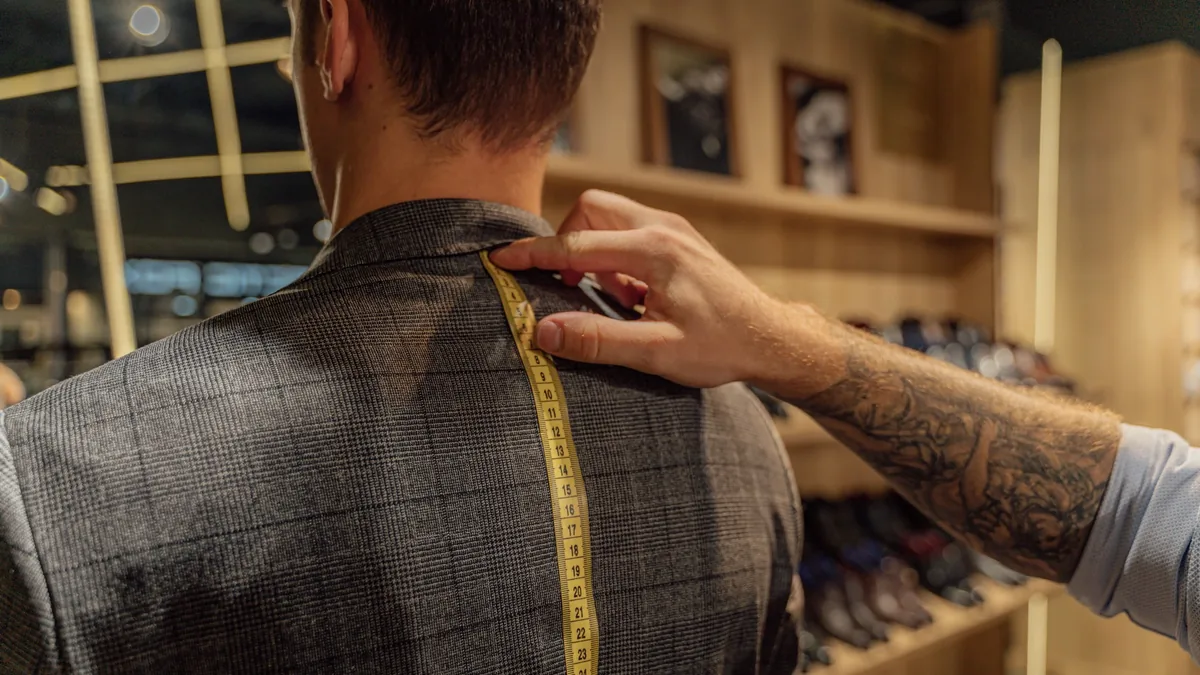
You should know that fit is prioritized in a hierarchy, with the shoulder seam of jackets and shirts being the most critical and difficult to alter, it should sit precisely at the bony edge of your shoulder. The chest of a tailored jacket must allow for a fist of space between the buttoned front and your torso, while trousers should stay in contact with your waist without a belt's sole responsibility and break cleanly at the shoe. Different garment types have different fit rules; for example, a knit polo shirt should fit closely to the body, while a woven camp shirt is designed with significant ease. Fabric composition dramatically influences perceived fit; rigid fabrics like denim require more precise initial sizing, while stretch fabrics or soft wools offer more forgiveness. Heat management is a direct function of fit, as overly tight clothing restricts airflow and traps heat, while excessively loose garments can billow and reduce cooling efficiency. Always assess fit while assuming your typical posture for the occasion, not in an artificially stiff stance, and remember that even high-quality garments often require minor professional alterations for optimal results.
Common questions
Is it better to buy a larger size and have it taken in? This is a common strategy, but it works only for certain adjustments like narrowing a shirt's torso or taking in trousers; it cannot fix shoulders that are too broad or a collar that is too large. How much should a suit jacket sleeve show? The general rule is for the jacket sleeve to end at the wrist bone, allowing approximately half an inch of the dress shirt cuff to be visible. What is the difference between slim, regular, and relaxed fit? These are commercial terms with no universal standard, but generally they describe progressively more inches of "ease" or extra fabric in the chest and waist of a garment. Can a tailor fix any fit issue? No, tailors cannot magically add fabric where none exists, and major reductions or complex restructuring often cost more than the garment's value. How should trousers fit in the thigh? They should follow the leg's shape without pulling horizontally across the fabric, which indicates they are too tight, or exhibiting excessive loose fabric, which appears sloppy. Does fit change with age or weight fluctuation? Yes, a man's body shape can change, necessitating a reassessment of fit and potentially alterations or new garments to maintain a proper appearance.
Pros and cons
The primary pro of excellent fit is the immediate elevation of any garment, including inexpensive ones, creating a polished, intentional, and confident appearance. It enhances physical comfort and freedom of movement, reduces wear and tear on the clothing itself, and ensures the wearer is appropriately dressed for the activity at hand. A significant con is the associated cost and time, as achieving ideal fit often requires professional alterations, moving beyond simple off-the-rack purchases. The pursuit of perfect fit can also lead to frustration for men whose body proportions fall far outside standard sizing, making ready-to-wear largely inaccessible. A common mistake is prioritizing a trendy, ultra-slim fit over one that is appropriate for the wearer's body type and the garment's function, resulting in a restrictive and unflattering look. Many who regret their choices have purchased items that fit poorly in a key area like the shoulders, believing it could be corrected, only to find the alteration is impossible or prohibitively expensive.
Who it suits
The principle of good fit universally suits every man, but the specific style of fit must be matched to individual morphology and lifestyle. Men with a standard or athletic build will find the widest selection of ready-to-wear clothing that aligns with conventional fit models, though alterations may still refine the result. Those with more unique proportions, such as a significantly larger chest relative to waist or longer arms and torso, are best served by seeking brands that cater to their specific build or investing in made-to-measure services. Men who prioritize comfort and physical activity, especially in hot climates, are suited by fits that incorporate more ease in key areas like the chest, back, and thighs, using breathable fabrics. Conversely, men in formal, sedentary professional environments often benefit from a closer, more structured fit that projects a sharp, authoritative silhouette. Ultimately, understanding and implementing correct fit suits the individual who is willing to be honest about his own measurements and priorities, rather than blindly following transient fashion trends.