10 Asian Designers Debut at Hong Kong Fashion Show
Fashion Asia Hong Kong celebrated its 10th anniversary by staging its first-ever runway show for its 10 Asian Designers To Watch program.
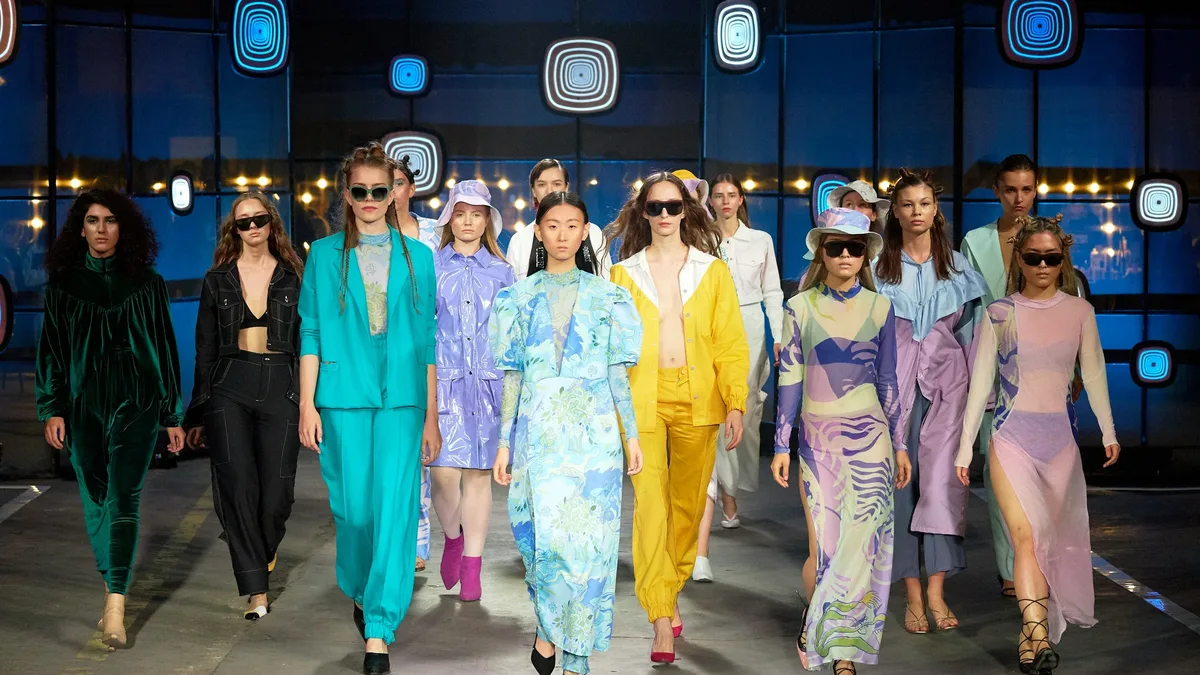
Fashion Asia Hong Kong launched its first 10 Asian Designers To Watch runway show on September 3. The event coincided with the Hong Kong Fashion Fest Gala, with an exhibition running through September 13 at Peak Galleria.
Hypebeast interviewed all ten designers, who represent the Chinese Mainland, Hong Kong, Thailand, South Korea, and the Philippines. Their conversations covered design philosophy, business realities, and the cultural narratives shaping their work.
Design Philosophies and Cultural Roots
Designers emphasized starting points rooted in personal experience and material research. Sifan Chen from China draws from street style and travel fragments. He showed a hand-woven denim jacket made from cashmere and linen on old Guizhou machines, prioritizing softness and breathability over traditional stiffness.
For Thailand's Disaya Sorakraikitikul of DISAYA, craft technique is the foundation. She focuses on translating cultural emotion and patience into fashion, rather than directly reproducing traditional motifs. Her crystal macramé jeans, where hand-knitted macramé is fixed onto denim, aim for versatility across genders and occasions.
The South Korean duo behind LEJE, Yangmo Je and Juhyeong Kang, begin with archival research. Their Daenggi Dress reinterprets a traditional hair ribbon, using roughly ten meters of fabric hand-beaded with reimagined Joseon royal motifs.
Balancing Art and Commerce
Financial sustainability is a primary concern for several labels. Hong Kong's Kinyan Lam states a brand's first consideration must be cash flow. He focuses on daily wear to sustain the business, reserving more artistic pieces for when the supply chain is stable. "Finding our target audience is more important than what's currently trending," he said.
DISAYA's Sorakraikitikul acknowledges the challenge of balancing artistic and commercial demands. Similarly, the LEJE team calls striking a harmony between artistic originality and commercial practicality "essential."
Sifan Chen faces the specific difficulty of convincing buyers to accept high prices for his labor-intensive pieces. He walks clients through the origin of each item to justify the cost.
Gender and Silhouette Approaches
Many designers approach gender through cut, sizing, or fabric treatment, moving beyond traditional menswear and womenswear categories.
Roko Arceo of the Philippines' Maligaya Clothing Co. Uses sizing to create unisex options. "All of our shirts start from XS to XL, meaning all of the women from XS or 2XS can wear some of our men's pieces," he explained. He also incorporates lace into men's designs.
Prince Padilla of NOVEL, also from the Philippines, comes from a menswear background and sees unisex design as a default. A garment, he said, is "usually, it is really just a garment."
The Chinese menswear team NULLUS addresses gender structurally by softening the aggression in traditional menswear silhouettes, relaxing shoulders and easing waistlines.
DISAYA dissolves gender in the cloth itself, pairing embroidery and lace with structured tailoring to achieve a look that is "delicate yet powerful, sensual yet structured."
Sustainability and Material Innovation
Sustainability drives material choices for some brands. Maligaya Clothing Co. Begins every collection by sourcing sustainable materials, often resulting in one-off pieces. Arceo admits that maintaining this principle is one of the hardest aspects of his work.
His exhibition piece from the "Found Treasures" collection used antique doilies, naturally dyed and shaped into corals and sea creatures.
NOVEL's Padilla is led foremost by material research, a habit from his fine art background. For the exhibition, he presented an embroidered look intentionally left unlined to shows the raw internal stitches and beadwork.
Visions for the Future
Designers shared modest, culturally-focused ambitions for the next five years. Sifan Chen hopes to show "a more diverse Asian culture, rather than the fantasy of Asia or the East seen under a Western system."
DISAYA aims to be recognized not only as a Thai brand, but as a brand with a distinct global perspective. LEJE hopes to be known for articulating Korean heritage in its own voice.
Maligaya's Arceo wants to start a conversation on how to be fashionable and sustainable simultaneously. NOVEL's Padilla is working to bring more contemporary design to Manila's young fashion scene, though he remains relaxed about specific future plans.
Mentorship played a key role for several designers. Sifan Chen recalls advice from his Central Saint Martins course leader Fabio Piras: "I need to trust my simplicity." DISAYA's Sorakraikitikul cited Louise Wilson at the same institution as her greatest intellectual mentor. Maligaya's Arceo gave a shout-out to his associates Athena, Ashanti, and Dale.